
Tumbler screeners, vital in industries like food and pharmaceuticals, demand robust foundations. Proper foundation design, detailed in documents like the screener tumbler machine pdf, ensures operational stability and longevity.
Overview of Tumbler Screening Machines
Tumbler screening machines, like those from GKM Siebtechnick GmbH, utilize a rotating cylindrical screen for efficient particle separation. These machines, detailed in resources such as a screener tumbler machine pdf, are crucial for fine and ultra-fine product processing. Their operation involves eccentric motion, adjustable between 25-40mm, driven by a V-belt at variable speeds (around 120 RPM).
The basic rotary action mimics manual screening, making them ideal for diverse applications. Understanding their mechanics is paramount for appropriate foundation design, ensuring stability during operation and minimizing vibration transmission, as outlined in relevant documentation.
Importance of Proper Foundation Design
A well-engineered foundation is critical for tumbler screeners, preventing operational issues and extending machine lifespan. As detailed in a screener tumbler machine pdf, inadequate foundations can amplify vibrations, leading to structural damage and reduced screening efficiency. Proper design, considering dynamic and static loads, minimizes interference between multiple machines, addressing soil-structure interaction.
Compliance with building regulations, NSF, FDA, Kosher, and Halal standards (where applicable) is also essential. A robust foundation ensures safe, reliable, and compliant operation, safeguarding product quality and worker safety.
Scope of this Article: Foundation Design for Screener Tumbler Machines
This article comprehensively addresses foundation design for tumbler screeners, referencing key considerations found within a screener tumbler machine pdf. We’ll explore geotechnical investigations, suitable foundation types – including concrete slabs and isolated footings – and vibration isolation techniques like spring and rubber pad isolators.
Furthermore, we’ll cover load calculations, construction best practices, and navigating regulatory compliance. The goal is to provide a practical guide for engineers and operators ensuring stable, efficient, and compliant machine installations.

Understanding the Operational Forces of Tumbler Screeners
Tumbler screeners generate dynamic and static loads during operation, alongside significant vibration. A screener tumbler machine pdf details these forces for proper foundation design.
Dynamic Loads During Operation
Dynamic loads on tumbler screeners, as outlined in a screener tumbler machine pdf, stem from the rotating, eccentric motion and material impact. These fluctuating forces are critical for foundation design. The adjustable eccentricity – ranging from 25 to 40 mm – directly influences the magnitude of these dynamic impacts.
Furthermore, the screening process itself introduces variable loads as material cascades and interacts with the screen surfaces. Accurately assessing these dynamic forces, considering factors like material density and feed rate, is paramount to prevent premature foundation failure and ensure long-term operational reliability. Ignoring these dynamic aspects can lead to significant structural issues.
Static Loads and Machine Weight Distribution
A screener tumbler machine pdf emphasizes that static loads primarily consist of the machine’s overall weight. This weight isn’t uniformly distributed; it’s concentrated around key components like the steel cylinder (diameter 15.2cm, height 14cm) and the drive system.
Understanding this weight distribution is crucial for foundation design. Uneven loading can cause differential settlement, leading to structural stress. The foundation must adequately support the total static load while accounting for these localized concentrations to maintain machine alignment and prevent operational issues. Proper load assessment is vital.
Vibration Characteristics and Amplitude
The screener tumbler machine pdf highlights that these machines generate significant vibration due to their rotary motion – an adjustable eccentricity of 25 to 40 mm drives this. This vibration, while essential for screening, transmits dynamic forces to the foundation.
Amplitude is a key consideration; higher amplitudes demand more robust isolation. Ignoring these characteristics can lead to resonance, amplifying vibrations and potentially damaging both the machine and the foundation. Careful analysis, detailed in the pdf, is needed to mitigate these effects through appropriate design strategies.

Geotechnical Investigation for Foundation Design
Foundation design, as outlined in the screener tumbler machine pdf, necessitates thorough soil analysis, including bearing capacity and groundwater table assessment via methods like SPT.
Soil Type Analysis and Bearing Capacity
Accurate soil characterization is paramount for tumbler screener foundations, detailed within the screener tumbler machine pdf. Investigations must identify soil classification – granular, cohesive, or organic – impacting bearing capacity. Bearing capacity, the maximum pressure soil can withstand, dictates foundation size and type. SPT (Standard Penetration Test) and CPT (Cone Penetration Test) data are crucial for determining these parameters. Geotechnical reports should clearly define allowable bearing pressure, considering safety factors. Ignoring soil properties leads to settlement, vibration amplification, and potential machine failure, necessitating careful analysis and adherence to pdf guidelines.
Subsurface Exploration Methods (Boring, SPT, CPT)
The screener tumbler machine pdf emphasizes thorough subsurface investigation. Soil borings provide continuous samples for visual classification and laboratory testing. The Standard Penetration Test (SPT) measures soil resistance to penetration, estimating density and strength. Cone Penetration Testing (CPT) offers continuous profiling of soil properties with depth. These methods, detailed in geotechnical reports, determine soil layering, groundwater levels, and crucial parameters for bearing capacity calculations. Accurate data from these explorations are vital for safe and reliable foundation design, preventing costly failures.
Groundwater Table Considerations
The screener tumbler machine pdf highlights the critical impact of the groundwater table on foundation performance. Elevated water tables reduce effective stress, decreasing soil bearing capacity and potentially causing settlement. Foundation design must account for hydrostatic pressures and buoyancy effects. Drainage systems may be necessary to lower the water table during construction and operation. Ignoring groundwater can lead to instability and structural damage. Thorough investigation, as outlined in the pdf, is essential for a durable and safe foundation.
Foundation Types Suitable for Tumbler Screeners
Concrete foundations – slab-on-grade or isolated footings – are common, as detailed in the screener tumbler machine pdf. Vibration isolation techniques may also be integrated.
Concrete Foundations: Slab-on-Grade
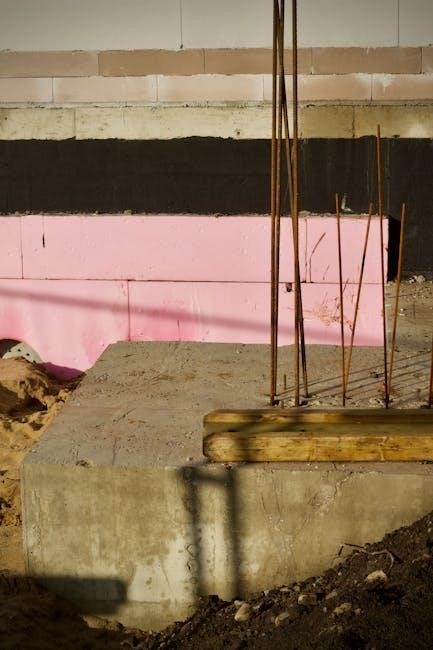
Slab-on-grade foundations represent a cost-effective solution for tumbler screeners, particularly where soil bearing capacity is adequate, as outlined in screener tumbler machine pdf guides. These foundations distribute the machine’s weight over a larger area, minimizing localized stress. Careful consideration must be given to concrete mix design, ensuring sufficient strength and durability to withstand dynamic loads.
Reinforcement detailing is crucial, employing steel rebar to manage tensile stresses induced by vibration and operational forces. Proper drainage is essential to prevent water accumulation beneath the slab, which could compromise its integrity. The slab thickness is determined by load calculations and soil conditions, detailed within the design documentation.
Reinforced Concrete Foundations: Isolated Footings
Isolated footings offer a targeted support system for tumbler screeners, as detailed in screener tumbler machine pdf resources. Each footing supports a specific machine component, distributing loads directly to the soil. This approach is beneficial for uneven load distribution or varying soil conditions. Design necessitates accurate load determination – static weight plus dynamic forces from operation.
Reinforcement detailing is paramount, utilizing rebar to resist bending moments and shear forces. Footing dimensions (width, depth, and length) are calculated based on soil bearing capacity and applied loads, ensuring stability and preventing settlement. Proper concrete mix design is vital for durability.
Machine Foundations with Vibration Isolation
Vibration isolation is crucial for tumbler screeners, as outlined in screener tumbler machine pdf guides, minimizing noise and preventing structural damage. These foundations decouple the machine from the surrounding structure, reducing transmitted vibrations. Techniques include spring isolators and rubber pad isolators, selected based on frequency and load requirements.
Inertia bases, often concrete structures, add mass to dampen vibrations. Careful design considers the machine’s natural frequency and the isolator’s stiffness to achieve optimal isolation. Proper installation and maintenance are essential for sustained effectiveness.

Design Considerations for Concrete Foundations
Concrete foundations, per screener tumbler machine pdf guidelines, require specific mix designs and reinforcement detailing. Accurate dimension and thickness calculations are vital for load distribution.
Concrete Mix Design and Strength Requirements
Concrete mix design for tumbler screener foundations, as detailed in the screener tumbler machine pdf, must prioritize durability and vibration resistance. A minimum compressive strength of 3000 psi is generally recommended, though specific requirements depend on machine weight and dynamic loads.
Consider using a water-to-cement ratio of 0.45 or less to enhance strength and reduce permeability. Air entrainment is crucial for freeze-thaw resistance, particularly in outdoor installations. Aggregate selection should focus on durability and gradation. Proper curing procedures are essential to achieve the specified strength and prevent cracking, ensuring a stable base for prolonged operation.
Reinforcement Detailing for Load Distribution
Reinforcement detailing, as outlined in the screener tumbler machine pdf, is critical for effectively distributing loads from the vibrating screener. Utilize a grid of reinforcing steel, typically #4 or #5 rebar, spaced at 12-18 inches on center. Increase density near the machine’s base where stresses are concentrated.
Properly anchor the reinforcement to adequately transfer loads to the concrete foundation. Consider using headed reinforcement or bent-up bars for enhanced anchorage. Ensure sufficient concrete cover to protect the steel from corrosion and maintain structural integrity over the machine’s lifespan.
Foundation Dimensions and Thickness Calculation
Determining foundation dimensions and thickness, detailed within the screener tumbler machine pdf, requires careful consideration of static and dynamic loads. A typical slab-on-grade foundation should be at least 8-12 inches thick, but this varies based on soil bearing capacity and machine weight.
Foundation width should extend at least 2 feet beyond the machine’s footprint in all directions. Perform calculations considering impact factors and vibration amplitudes. Finite Element Analysis (FEA), as suggested in related documentation, can refine these dimensions for optimal performance.

Vibration Isolation Techniques
Vibration isolation, crucial for tumbler screeners, utilizes spring or rubber pad isolators, or inertia bases, as detailed in the screener tumbler machine pdf, to minimize transmission.
Spring Isolators: Selection and Installation
Spring isolators, as outlined in the screener tumbler machine pdf, are selected based on the machine’s weight and operating frequency to achieve optimal vibration damping. Careful consideration of spring deflection and natural frequency is paramount.
Proper installation involves ensuring level placement and correct load distribution. Pre-compression, often specified by the manufacturer, is vital for maintaining isolation effectiveness. Regular inspection for spring fatigue or corrosion is also essential for sustained performance and preventing potential operational issues. Correct mounting minimizes noise and extends equipment life.
Rubber Pad Isolators: Advantages and Limitations
Rubber pad isolators, detailed within the screener tumbler machine pdf, offer a cost-effective solution for vibration damping, particularly for lighter machines. Their primary advantage lies in simplicity and ease of installation, requiring minimal maintenance. They effectively reduce transmitted force and noise.
However, limitations include lower load capacity compared to spring isolators and susceptibility to environmental factors like temperature and oil exposure. Rubber degradation over time necessitates periodic replacement. Their effectiveness diminishes with higher frequencies, making them less suitable for intensely vibrating equipment.
Inertia Base Design for Vibration Damping
Inertia bases, as outlined in screener tumbler machine pdf guides, are substantial concrete structures designed to counteract dynamic forces. By significantly increasing the mass of the system, they lower the overall vibration amplitude transmitted to the supporting structure; This approach is particularly effective for high-frequency, low-amplitude vibrations.
However, inertia bases require considerable space and substantial concrete work, increasing project costs. Accurate calculation of the required mass is crucial; insufficient mass renders the system ineffective, while excessive mass is wasteful. Proper anchoring to the floor is also essential.
Load Calculations and Analysis
Load calculations, detailed in the screener tumbler machine pdf, determine static and dynamic forces. Finite Element Analysis (FEA) assesses stress distribution for a stable foundation.
Determining Static and Dynamic Loads
Static loads encompass the machine weight and materials processed, crucial data found within the screener tumbler machine pdf. Dynamic loads arise from the tumbler’s rotation and vibration, requiring careful assessment. Impact loads, stemming from material feed and internal component movement, must also be considered. Accurate determination necessitates understanding operational parameters like screening speed, material density, and feed rate. The pdf guides calculating these forces, factoring in eccentric motion and potential imbalances. Proper load assessment is paramount for a durable and safe foundation design, preventing premature failure and ensuring long-term operational reliability.
Finite Element Analysis (FEA) for Stress Distribution
Finite Element Analysis (FEA), detailed within the screener tumbler machine pdf, is vital for visualizing stress distribution within the foundation. This sophisticated method models the foundation’s response to static and dynamic loads, identifying areas of high stress concentration. The pdf emphasizes FEA’s role in optimizing reinforcement detailing and foundation dimensions. By simulating real-world conditions, FEA ensures the design can withstand operational forces. Accurate modeling considers soil-structure interaction and vibration characteristics, leading to a robust and reliable foundation capable of long-term performance.
Consideration of Impact Loads
The screener tumbler machine pdf highlights the necessity of accounting for impact loads during foundation design. These arise from material feed, machine stoppages, and potential component failures. Ignoring these forces can lead to premature foundation cracking or failure. The pdf recommends incorporating a dynamic load factor to amplify static loads, reflecting potential impact severity. Analyzing these loads via FEA is crucial. Proper concrete mix design and reinforcement detailing, as outlined in the document, enhance impact resistance and ensure long-term structural integrity.

Foundation Construction Best Practices
Foundation construction, per the screener tumbler machine pdf, requires meticulous excavation, precise formwork, and controlled concrete pouring. Proper curing and quality control are essential.
Excavation and Site Preparation
Excavation for tumbler screener foundations, as detailed in the screener tumbler machine pdf, must extend below the frost line and account for soil bearing capacity. Site preparation involves clearing vegetation, removing topsoil, and compacting the subgrade to ensure a stable base. Proper grading is crucial for drainage, preventing water accumulation that could compromise foundation integrity. Soil testing, referenced in the pdf, verifies suitability and identifies potential issues like expansive clay or groundwater. Accurate dimensions, aligned with the foundation design, are paramount during excavation to avoid costly rework and maintain structural stability.
Formwork and Concrete Pouring Procedures
Formwork construction, guided by the screener tumbler machine pdf, must accurately reflect foundation dimensions and reinforcement details. Concrete pouring should occur in continuous lifts to avoid cold joints, ensuring homogeneity. Vibration during pouring consolidates the concrete, eliminating air pockets and maximizing strength. Concrete mix design, specified in the pdf, dictates slump and aggregate size for optimal workability and durability. Proper curing – maintaining moisture and temperature – is vital for achieving design strength. Strict adherence to these procedures, detailed in the pdf, guarantees a robust foundation.
Curing and Quality Control
Curing, as detailed in the screener tumbler machine pdf, is paramount for concrete strength development. Methods include water ponding, wet coverings, or curing compounds, maintained for at least seven days. Quality control necessitates regular slump tests during pouring and compressive strength tests on concrete cylinders. The pdf outlines acceptable tolerances for dimensions and reinforcement placement. Visual inspections should identify any defects like cracking or honeycombing. Documentation of all tests and inspections, per the pdf’s guidelines, ensures foundation integrity and compliance.

Addressing Interference Between Machine Foundations
Foundation spacing and isolation strategies, outlined in the screener tumbler machine pdf, minimize vibration transmission between machines, preventing operational disruptions and structural damage.
Analyzing Vibration Transmission Between Machines
Vibration transmission between tumbler screeners is a critical concern, detailed within the screener tumbler machine pdf. Dynamic soil-structure interaction plays a significant role, requiring careful analysis. Understanding how vibrations propagate through the ground is essential for preventing interference. Finite Element Analysis (FEA) can model these effects, predicting amplitude and frequency responses. Foundation isolation techniques, like spring or rubber pad isolators, are employed to decouple machines. Proper foundation spacing, informed by geotechnical investigations, further minimizes energy transfer, ensuring each machine operates within acceptable vibration limits and maintains product quality.
Foundation Spacing and Isolation Strategies
The screener tumbler machine pdf emphasizes strategic foundation spacing to mitigate vibration interference. Adequate separation distances, determined by vibration characteristics and soil properties, are crucial. Isolation strategies include employing inertia bases and resilient mounting systems – spring isolators or rubber pad isolators – to dampen vibrations. Careful consideration of dynamic soil-structure interaction is paramount. Combining sufficient spacing with effective isolation minimizes energy transfer, ensuring optimal performance and preventing damage. Detailed calculations, often utilizing Finite Element Analysis (FEA), guide these design choices.
Dynamic Soil-Structure Interaction
The screener tumbler machine pdf highlights dynamic soil-structure interaction as a critical design aspect. Tumbler screeners induce vibrations that propagate through the foundation into the surrounding soil. This interaction alters the machine’s dynamic response and affects soil stresses. Accurate modeling requires considering soil damping and stiffness properties. Finite Element Analysis (FEA) is often employed to simulate this complex behavior. Ignoring this interaction can lead to excessive vibrations, foundation settlement, and potential machine failure, necessitating careful geotechnical investigation.

Regulatory Compliance and Building Codes
Foundation designs must adhere to local building regulations and obtain necessary permits. The screener tumbler machine pdf may require NSF, FDA, Kosher, or Halal compliance.
Local Building Regulations and Permits
Foundation construction for tumbler screeners necessitates strict adherence to prevailing local building codes. Before commencing any work, securing the appropriate permits is crucial, often involving detailed foundation design submissions. These submissions, referencing the screener tumbler machine pdf, must demonstrate structural integrity and safety.
Regulations vary significantly by location, impacting concrete specifications, reinforcement requirements, and vibration isolation protocols. Ignoring these regulations can lead to costly delays, rework, or even legal repercussions. Thoroughly investigate local ordinances and engage qualified professionals to ensure full compliance throughout the foundation process.
NSF, FDA, Kosher, and Halal Requirements (if applicable)
When tumbler screeners process materials for regulated industries – food, beverage, or pharmaceuticals – foundation design must support stringent hygiene standards. Compliance with NSF, FDA, Kosher, and Halal certifications often dictates specific construction materials and finishes. The screener tumbler machine pdf should detail these needs.
Foundations must prevent contamination, facilitate thorough cleaning, and resist microbial growth. Seamless concrete floors, epoxy coatings, and sealed penetrations are common requirements. Documentation verifying material suitability and construction practices is essential for audit purposes and regulatory approval.
Adherence to Machine Foundation Standards
Foundation design for tumbler screeners isn’t arbitrary; it must align with established machine foundation standards. The screener tumbler machine pdf often references guidelines from organizations focused on vibration control and structural integrity; These standards dictate acceptable vibration levels, concrete strength, and reinforcement detailing.
Following these standards ensures the foundation can withstand dynamic loads and prevent premature failure. Proper adherence minimizes noise, extends machine lifespan, and safeguards operator safety. Detailed calculations and documentation, as outlined in the pdf, are crucial for demonstrating compliance.