
Exploring new possibilities awaits with your 2018 Ford F-150 service manual! This guide unlocks creativity, innovation, and potential, ensuring a fulfilling ownership experience.
Overview of the Vehicle
The 2018 Ford F-150 represents a robust blend of capability, durability, and innovative technology, designed to meet the diverse needs of truck owners. This vehicle isn’t merely transportation; it’s a tool built for work, adventure, and everyday life. Understanding its features and systems is paramount to maximizing its potential and ensuring a safe, enjoyable driving experience.
This owner’s manual serves as your comprehensive guide to navigating the intricacies of your F-150. From its high-strength, military-grade aluminum-alloy body to its powerful engine options – including the EcoBoost® – every aspect is engineered for performance. Familiarize yourself with the vehicle’s layout, controls, and available features to unlock its full capabilities.
Whether you’re utilizing its towing capacity, exploring off-road terrain, or simply commuting, this manual will provide valuable insights into operating and maintaining your 2018 F-150 effectively. It’s a resource to be consulted regularly throughout your ownership journey.
Importance of the Owner’s Manual
Your 2018 Ford F-150 owner’s manual is an indispensable resource, far beyond a simple collection of pages. It’s a detailed guide crafted by Ford to ensure you fully understand and safely operate your vehicle. Ignoring this manual can lead to improper use, potentially damaging your F-150 or, more importantly, compromising your safety and the safety of others.
Within these pages, you’ll find crucial information regarding vehicle operation, maintenance schedules, and explanations of various systems – from the SYNC® infotainment system to advanced safety features. It details fluid specifications, tire information, and troubleshooting procedures, empowering you to address minor issues and prevent larger, more costly repairs.
Treat this manual as a key component of your ownership experience. Regular review will unlock the full potential of your F-150 and contribute to years of reliable service. Keep it readily accessible within the vehicle for quick reference.
Understanding Your Vehicle
Discover the unique customs enriching family life, the essence of identity, and connections—more than just habits, they define us and unite generations.
Dashboard Symbols and Indicators
Your 2018 Ford F-150’s dashboard utilizes a comprehensive system of symbols and indicators to communicate vital vehicle information. Familiarizing yourself with these is crucial for safe and informed operation. Ignoring a warning light can lead to more significant issues.
Key indicators include the check engine light, oil pressure warning, battery warning, brake system warning, and airbag deployment indicators. Understanding the color coding – red, yellow, and green – is also essential. Red typically signifies a serious problem requiring immediate attention, while yellow indicates a potential issue needing investigation. Green generally confirms a system is actively engaged.
Furthermore, icons display information about your vehicle’s systems, like four-wheel drive engagement, cruise control status, and low fuel levels. The owner’s manual provides a detailed explanation of each symbol, its meaning, and recommended actions. Regularly reviewing this section will enhance your understanding and confidence behind the wheel.
Keyless Entry and Security System
The 2018 Ford F-150 features a sophisticated keyless entry and security system designed for convenience and protection. This system allows you to lock and unlock doors, and even start the engine, without physically using a key. Your vehicle is equipped with remote keyless entry transmitters, offering various functionalities.
Programming additional transmitters or replacing lost ones requires a specific procedure outlined in the owner’s manual. The security system includes an alarm that activates under certain conditions, such as forced entry or attempted theft. Understanding how to arm and disarm the system is vital.
Additionally, the system may incorporate features like remote start and panic button functionality. Regularly check the battery life of your key fobs to ensure reliable operation. Refer to the manual for detailed instructions on utilizing all aspects of this advanced security system and troubleshooting any potential issues.

Operating Your 2018 F-150
Mastering your F-150 involves understanding driving modes, controls, and essential procedures like starting, stopping, and performing routine fluid checks for optimal performance.
Starting and Stopping the Engine
Before starting your 2018 F-150, ensure the parking brake is engaged and the transmission is in Park (P) or Neutral (N). Depress the brake pedal fully. For vehicles with a key start, insert the key into the ignition and turn clockwise to the start position, releasing once the engine starts.
If equipped with a push-button start, simply press the start/stop button while depressing the brake pedal. The engine will start automatically. Allow the engine to run for a short period before driving to ensure proper oil circulation.
To stop the engine, depress the brake pedal and press the start/stop button again, or turn the ignition key to the off position. Ensure the transmission is in Park (P) before exiting the vehicle. Avoid prolonged idling, as it can reduce fuel efficiency and increase emissions. Always turn off the engine and remove the key (if applicable) when leaving the vehicle unattended.
Driving Modes and Controls
Your 2018 F-150 offers various driving modes selectable through the information display. These modes optimize vehicle performance for different conditions. Normal mode is suitable for everyday driving, while Sport mode enhances throttle response and steering feel for a more engaging experience.
For challenging terrain, utilize the Snow/Grass/Mud mode for increased traction. Tow/Haul mode optimizes shifting and engine braking when towing a trailer. Eco mode prioritizes fuel efficiency by adjusting throttle and transmission settings.
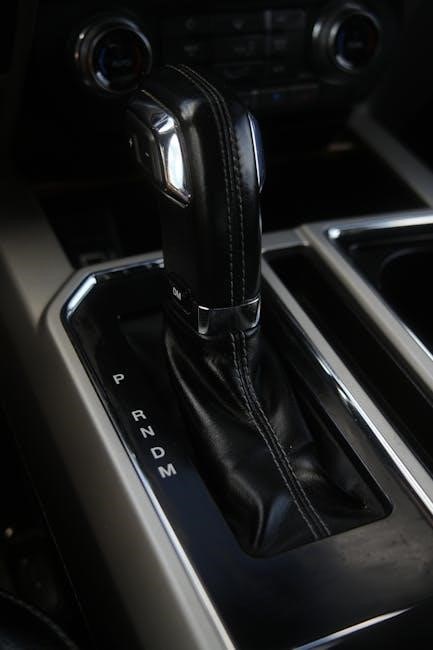
The electronic shift lever controls gear selection. Utilize the manual shift mode (+/-) for greater control when navigating hills or merging onto highways. Cruise control allows maintaining a set speed, while the steering wheel-mounted controls adjust audio and information display settings. Familiarize yourself with all controls for safe and efficient operation.
Fueling and Fluid Checks
Your 2018 F-150 requires unleaded gasoline with an octane rating of 87 or higher. The fuel tank capacity varies depending on the cab configuration. Always ensure the fuel cap is securely tightened after refueling to prevent fuel vapor emissions.
Regularly check fluid levels to maintain optimal vehicle performance. This includes engine oil, coolant, brake fluid, power steering fluid, and windshield washer fluid. Locate the dipsticks and reservoir caps, and refer to the fluid specifications section for the correct type of fluid.
Low fluid levels can indicate a leak or excessive consumption. If you notice consistently low levels, consult a qualified technician. Inspect hoses and connections for any signs of damage or leakage during fluid checks. Maintaining proper fluid levels is crucial for longevity.

Maintenance and Care

Adhering to the recommended maintenance schedule ensures your F-150’s reliability and longevity. Prioritize tire care, fluid levels, and specified capacities for peak performance.
Recommended Maintenance Schedule
Maintaining your 2018 Ford F-150 involves a structured schedule to ensure optimal performance and prevent potential issues. Regular inspections are crucial, beginning with oil and filter changes – typically every 7,500 to 10,000 miles, depending on driving conditions and oil type. Tire rotations should occur every 5,000 miles to promote even wear and extend tire life.
Beyond these basics, inspect brake pads, rotors, and fluid levels routinely. Air filters should be checked and replaced as needed, and coolant levels monitored. At 30,000 miles, consider servicing the transmission and transfer case fluids. A comprehensive inspection, including belts, hoses, and suspension components, is recommended at 60,000 miles. Following this schedule, detailed in your owner’s manual, will contribute to a safer and more reliable driving experience, preserving your F-150’s value over time.
Tire Information and Maintenance
Your 2018 Ford F-150’s tire performance directly impacts handling, fuel efficiency, and safety. Understanding your tire specifications – size, load rating, and speed rating – is essential, found on the tire sidewall and in your owner’s manual. Maintaining proper tire pressure, as indicated on the driver’s side doorjamb, is critical for even wear and optimal performance.

Regularly inspect tires for tread depth, damage (cuts, bulges), and uneven wear patterns. Rotate tires every 5,000 miles to maximize lifespan. Consider tire balancing to prevent vibrations and ensure smooth driving. When replacing tires, adhere to the original equipment specifications or consult a tire professional for suitable alternatives. Proper tire care extends tire life, enhances safety, and contributes to a more comfortable ride in your F-150.
Fluid Specifications and Capacities
Maintaining correct fluid levels is crucial for your 2018 Ford F-150’s optimal performance and longevity. This section details the specific fluids required for various systems. Engine oil capacity varies by engine type – typically 6.0 quarts of 5W-20 or 5W-30 synthetic blend. The cooling system requires a specific Ford Orange coolant concentrate mixed with distilled water (50/50 ratio), with a total capacity around 20 quarts.
Transmission fluid requirements depend on the transmission; automatic transmissions generally use Mercon V fluid. Power steering fluid utilizes a specific Ford power steering fluid. Brake fluid must meet DOT 3 specifications. Refer to your owner’s manual for precise capacities and fluid types. Using the incorrect fluids can cause significant damage, so always verify before adding or replacing any fluid in your F-150.

Features and Technology
Discover the innovative technology within your 2018 F-150, including the SYNC® system, navigation details, and advanced safety features designed for a connected drive.
SYNC® System Operation
Your 2018 Ford F-150’s SYNC® system is a powerful tool for connectivity and convenience. It allows hands-free calling, audio streaming, and voice-controlled navigation. Familiarize yourself with the touchscreen interface and steering wheel controls to maximize its functionality.
To make calls, simply say “Call” followed by the contact’s name. For music, connect your smartphone via Bluetooth or USB and use voice commands like “Play” or “Next Song.” The system also integrates with FordPass, enabling remote vehicle access and control.
Explore the settings menu to personalize your experience, adjusting display brightness, sound preferences, and available apps. Regularly update the SYNC® system software to ensure optimal performance and access to the latest features. Detailed instructions and troubleshooting tips are available within the system’s help section.
Navigation System Details
The 2018 Ford F-150’s navigation system provides accurate and reliable guidance to your destination. Input addresses using voice commands or the touchscreen keypad. The system displays turn-by-turn directions, estimated arrival times, and points of interest along your route.
Utilize the map view to zoom in and out, rotate the display, and view traffic conditions in real-time. The system automatically reroutes you to avoid congestion or road closures. Explore advanced features like lane guidance and speed limit display for enhanced safety.
Regularly update the navigation maps to ensure accuracy and access to the latest road information. Updates can be downloaded via USB or through a Wi-Fi connection. Consult the owner’s manual for detailed instructions on map updates and system settings. Proper use enhances your driving experience.

Safety Features and Systems
Your 2018 Ford F-150 is equipped with a comprehensive suite of safety features designed to protect you and your passengers. These include the Anti-lock Braking System (ABS), which prevents wheel lockup during hard braking, and Electronic Stability Control (ESC), which helps maintain control during challenging driving conditions.
The F-150 also features a robust airbag system, including front, side, and curtain airbags. Utilize the available Blind Spot Information System (BLIS) with Cross-Traffic Alert to enhance awareness of surrounding vehicles. The rearview camera provides a clear view of the area behind your truck.
Familiarize yourself with the operation of these systems and their limitations. Always prioritize safe driving practices and remain attentive to your surroundings. Refer to the owner’s manual for detailed information on each safety feature and its proper usage, ensuring maximum protection.
Troubleshooting and Emergency Assistance
This section details jump-starting procedures and towing information, vital for roadside emergencies. Consult the manual for detailed guidance and assistance protocols.
Jump Starting Procedures

When facing a discharged battery, safely jump-starting your 2018 F-150 requires careful adherence to specific procedures. First, position a properly functioning vehicle close enough for the jumper cables to reach, avoiding contact between the vehicles. Ensure both vehicles are switched off. Connect the positive (+) cable to the positive terminal of the discharged battery, then to the positive terminal of the assisting battery.
Next, connect the negative (-) cable to the negative terminal of the assisting battery, and finally, to a solid, unpainted metal surface on your F-150’s engine block – not the negative terminal of the discharged battery. Start the assisting vehicle and let it run for a few minutes. Attempt to start your F-150. If it doesn’t start immediately, allow the assisting vehicle to run longer. Once started, disconnect the cables in the reverse order of connection. Allow your F-150 to run for a substantial period to recharge the battery.
Towing Information and Procedures
Your 2018 Ford F-150 offers substantial towing capacity, but proper procedures are crucial for safety and vehicle integrity. Consult your owner’s manual for specific towing charts based on engine, axle ratio, and cab configuration to determine your maximum towing and payload capacities. Always use a weight-distributing hitch and sway control when towing substantial loads.
Before towing, inspect the trailer hitch, safety chains, and wiring connections. Ensure the trailer brakes are functioning correctly and are properly adjusted. When towing, maintain a safe following distance and reduce your speed. Be mindful of increased stopping distances and wider turning radii. Regularly check trailer tire pressure and wheel bearings during long journeys. Avoid sudden braking or sharp turns. Familiarize yourself with local towing regulations and restrictions before embarking on your trip.